
The short answer
A retainer buys a fixed team at a rising price. An AI system buys output that gets cheaper every quarter as the system learns your brand. That is the whole shift. In 2025, 60% of senior US marketers said they spent less on agencies because of AI (Typeface survey, via eMarketer), and the share of agencies calling AI a significant threat rose from 44% to 53% in a year (SparkToro).
The winning model is not a tool you operate and not an agency you brief. It is service as a software: a system built against your brand, run for you, improved weekly, with a human approval gate before anything ships.
Every CMO already runs the experiment. You brief an agency for a campaign. Twelve weeks later you brief them again, at the same rate, for work that is only marginally faster than the first time. The retainer is a subscription to a team that does not compound.
Meanwhile the tools on the other tab got 10x cheaper and 10x better in the same year. That gap is the story of 2025 and 2026, and it is now showing up in budgets, not just in think-pieces.
Agency spend
of senior US marketers cut agency spend in 2025, citing AI
Typeface svy · eMarketer
Threat perception
of agencies now call AI a significant threat, up from 44%
SparkToro 2025
Budget intent
of CMOs plan to cut agency budgets
Gartner
The ROI gap
CMOs invest in AI (98%). only ~1 in 3 see results
Gartner 2026 CMO Spend
Fig 01 · Four numbers, one direction. Sources cited inline.
The questionWhy does a retainer depreciate?
Because you pay for time, and time does not learn. An agency retainer prices a fixed pool of hours. Those hours cost more each renewal, and the twelfth campaign takes roughly as long as the first. There is no accumulation. The asset you are renting resets to zero every Monday.
An AI system inverts that. The first campaign is expensive to stand up. The second reuses the brand model, the prompts, the guardrails, the winning formats. By the twelfth, cost per asset has fallen and throughput has multiplied, because the system kept everything the last eleven taught it. Retainers age. Systems compound.
Fig 02 · The two cost curves. The gap between them is the compounding you are not buying from a retainer. Illustrative model.

The marketIs this actually happening, or is it hype?
It is happening in the ledger. The clearest signal is that marketers are moving money, not just opinions.
- 60% spent less on agencies in 2025 as a direct result of AI, per a Typeface survey reported by eMarketer. Attribute it honestly: Typeface sells into this narrative. The same survey also found 82% of AI agents were stuck in pilot, which is the real tension this whole piece resolves.
- Agency threat perception rose 44% to 53% year over year in SparkToro's State of Digital Agencies survey. Agencies themselves see it.
- 39% of CMOs plan to cut agency budgets (Gartner), and Forrester forecasts roughly 15% agency job cuts in 2026.
Search Engine Land calls it a dual squeeze: clients use AI to justify lower fees and to pull work in-house at the same time. Efficiency pressure from one side, pricing pressure from the other.
Fig 04 · One year of change, from the agencies' own mouths. Source: SparkToro State of Digital Agencies.

The trapSo why have most in-house AI plays failed?
Because buying a tool is not the same as owning a system. This is the gap that keeps CMOs cautious, and it is real. Gartner's 2026 CMO Spend Survey found 98% of CMOs invest in AI, but only about one in three see results. Marketing gets 15.3% of budget pointed at AI, while only around 30% of teams are ready to scale it.
The failure mode has a name: the pilot. A tool license lands, a few people learn it, one campaign ships, and then it stalls because nobody owns the workflow, the governance, or the weekly iteration. The frontier keeps moving and the pilot does not.
Fig 06 · Everyone invests. Few convert. The delta is an operating problem, not a model problem.
Fig 07 · The money is committed. The operating capability is not. That gap is the opening.

The modelWhat does service as a software actually mean?
It is a third option, and it is defined by who runs the system. An agency runs it and bills you hourly. A SaaS tool hands it to you and bills you per seat. Service as a software builds the system against your brand and runs it for you, so you get the output of a team with the cost curve of software.
| Agency | SaaS tool | Service as a software | |
|---|---|---|---|
| Who runs it | their team, billed hourly | you, per seat | the system, run for you |
| Cost curve | rises each renewal ↑ | flat per seat | falls each quarter ↓ |
| Output ceiling | headcount | your team's time | compute ✓ |
| Improves weekly | no | on their roadmap | yes |
| Brand knowledge | walks out the door | generic model | compounds in-system ✓ |
| Governance | varies | your problem | human gate built in |
Fig 09 · Three ways to buy marketing output. Only one compounds and stays governed.
Fig 10 · The operating loop. Governance is a gate, not an afterthought.
The guardrailHow do you run at the frontier without the exposure?
The reason enterprises stall is not capability. It is risk. Brand-unsafe output, undisclosed AI, a model that drifts. The answer is not to slow down, it is to put the newest capability behind a gate. Test on the frontier weekly, ship only what a human approves. You get the upside of moving first without betting the brand on an unreviewed generation.

Your cost per asset falls every quarter. Agencies age. This compounds.
The Wynngrid thesis
The shapeWhat does the system look like inside a brand?
Not one monolith. Three operating systems, each pointed at a place the retainer used to sit, sharing one governed spine.
Creative & campaign production
Ships campaign twelve faster and cheaper than campaign one.
Creator & licensed AI talent
Production, posting, measurement, disclosure. One dashboard.
Outbound that books calls
Finds prospects, personalizes, books into rep calendars.
Fig 13 · The three OS, sharing one governed spine.
The moveWhat should a CMO do in the 2026 budget?
Stop renewing the retainer on autopilot and start moving one repeatable, high-volume workflow to a system you own. The test is simple: find the work you brief the most often, and ask whether a fixed team or a compounding system should carry it next year.
Map
Find the repeatable creative work eating the retainer.
Build
Stand up the system against your brand, data, and guardrails.
Gate
Human approval before anything ships. Governance first.
Run
We operate it. Weekly improvement. The cost curve bends down.
Fig 14 · The four-step move from retainer to system.
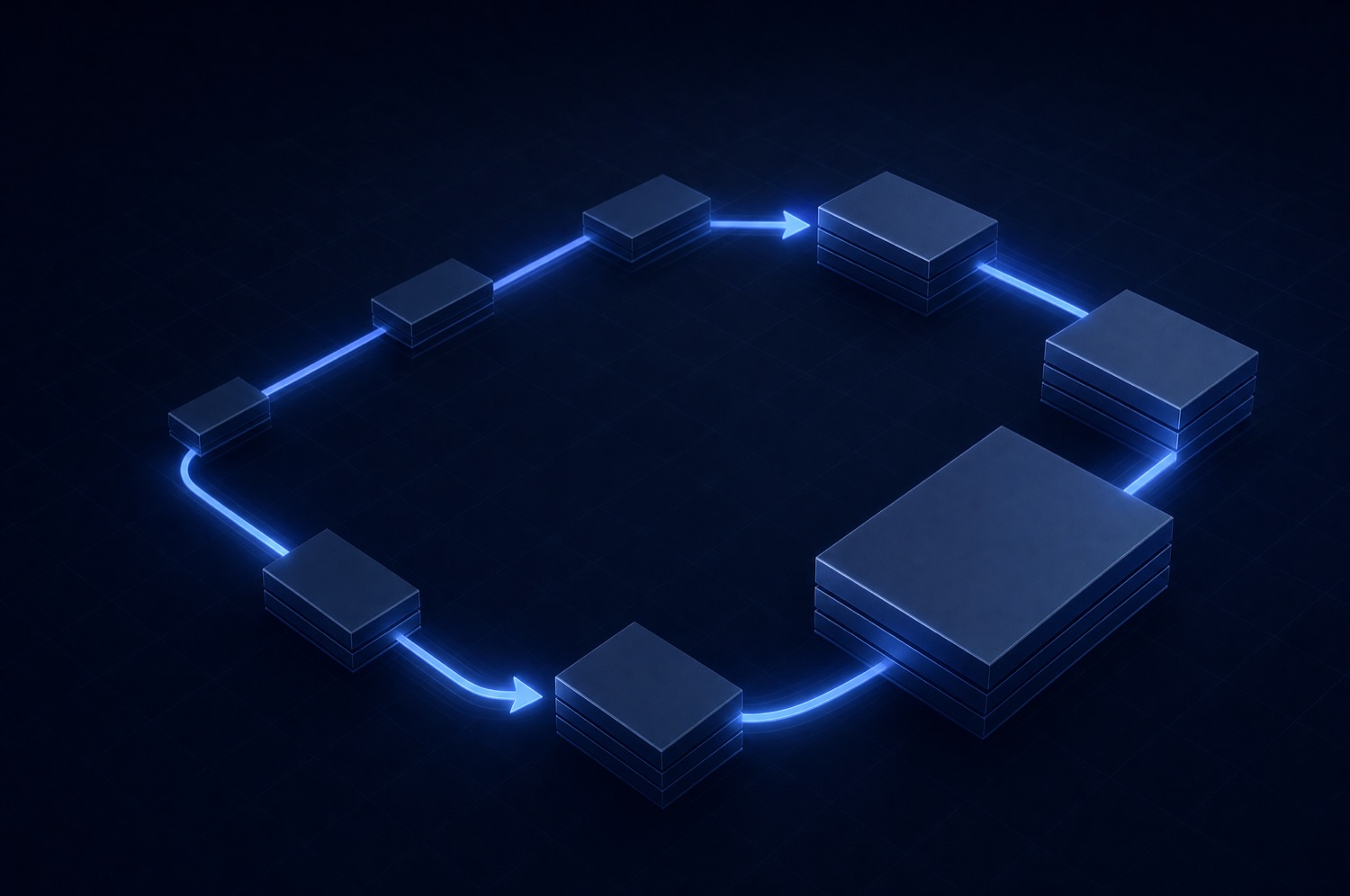
Fig 16 · Three years, one direction. The retainer stops being the default line item.
Wynngrid runs this model inside brands like Marico, Myntra, Titan, and Van Heusen. We build the system, we run it, and the cost per asset falls every quarter while a human still signs off on everything that ships. That is the whole offer, and it is why the retainer looks like a depreciating asset from here.